

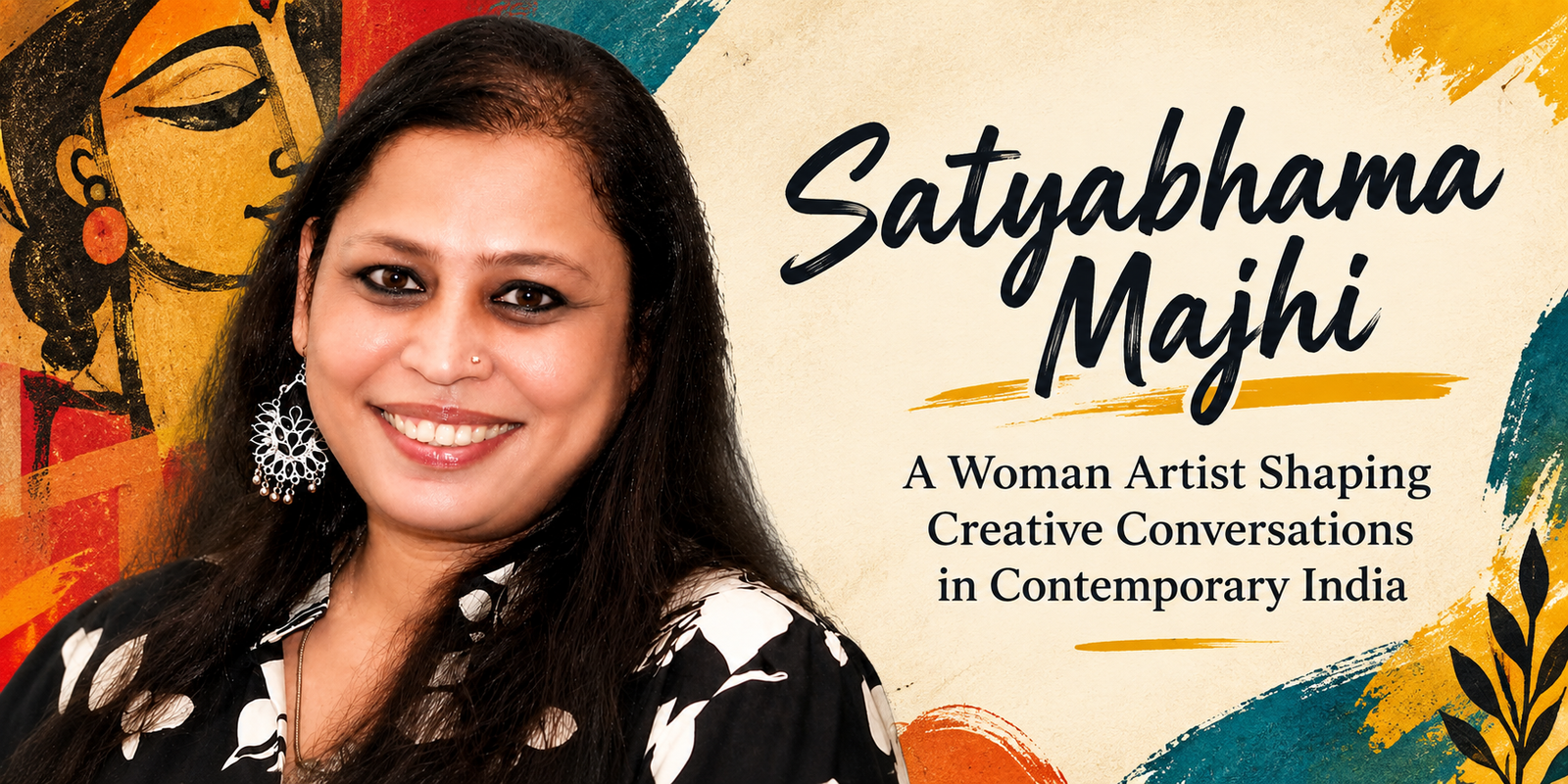
An artwork is often discussed in terms of its subject, composition or meaning. Yet another important question is sometimes overlooked: what is the artwork made of?
For contemporary artist Satyabhama Majhi, material is not simply a technical requirement. Across her practice of painting, sculpture, installation, mixed media and public art, materials can become closely connected with ideas of place, experience, memory and cultural knowledge.
This makes her approach to materials an important part of understanding her artistic process.
Rather than treating materials as something separate from an artwork’s concept, Majhi’s practice suggests a relationship in which the physical substance, the environment from which an idea emerges and the final artistic expression can influence one another.
Material as the Beginning of an Idea
Artists often begin with an image, memory or concept. But sometimes the material itself can stimulate an artistic idea.
A particular texture may suggest a surface.
A natural substance may evoke a landscape.
A wall may encourage a large-scale composition.
A found object may suggest a sculptural possibility.
For an artist working across several media, this relationship can be particularly productive.
Majhi’s movement between painting, sculpture, installation, mixed media and public art allows her ideas to respond to different physical possibilities. The material is therefore not always simply selected after the concept has been decided. It can become part of the thinking process.
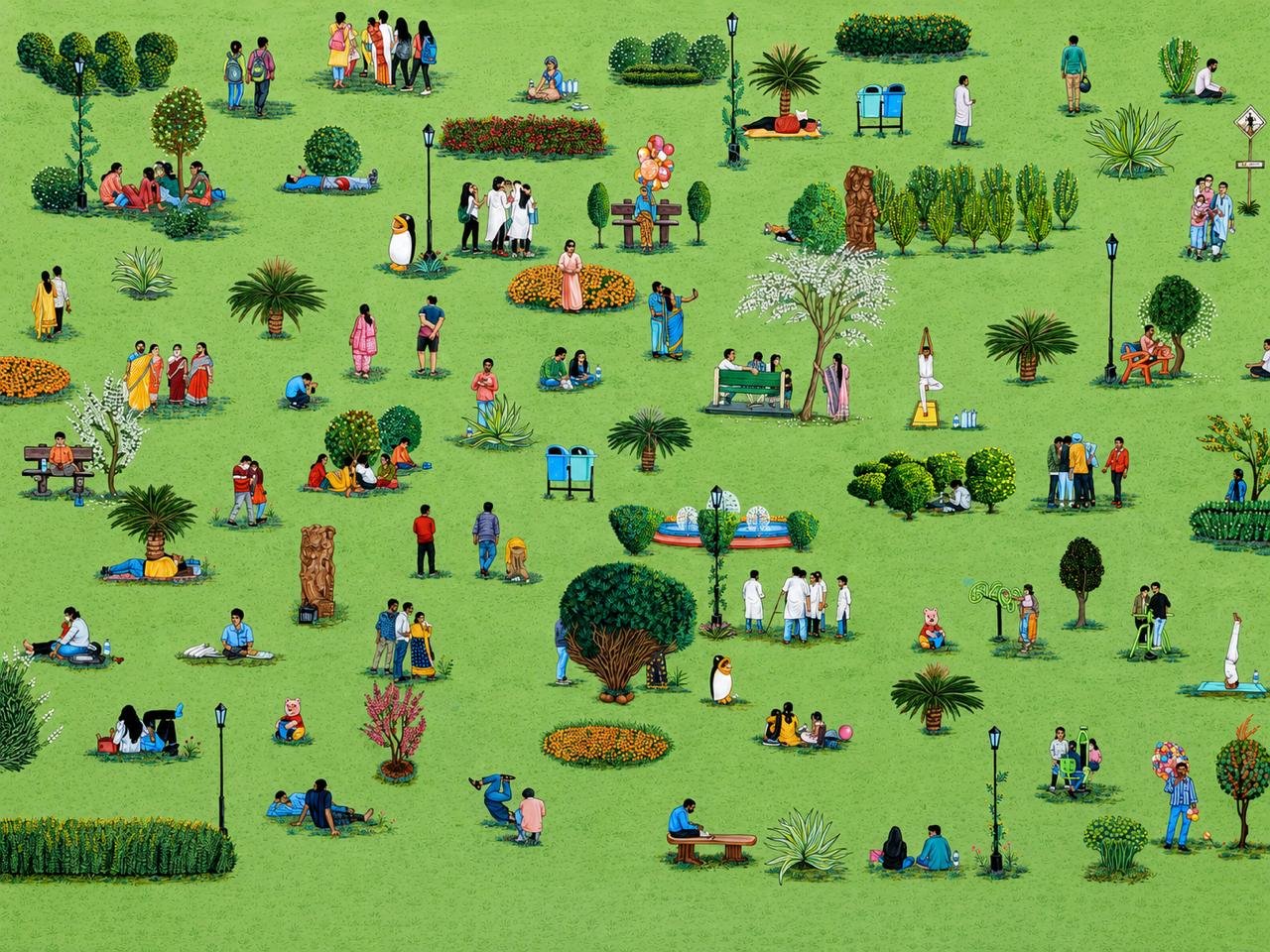
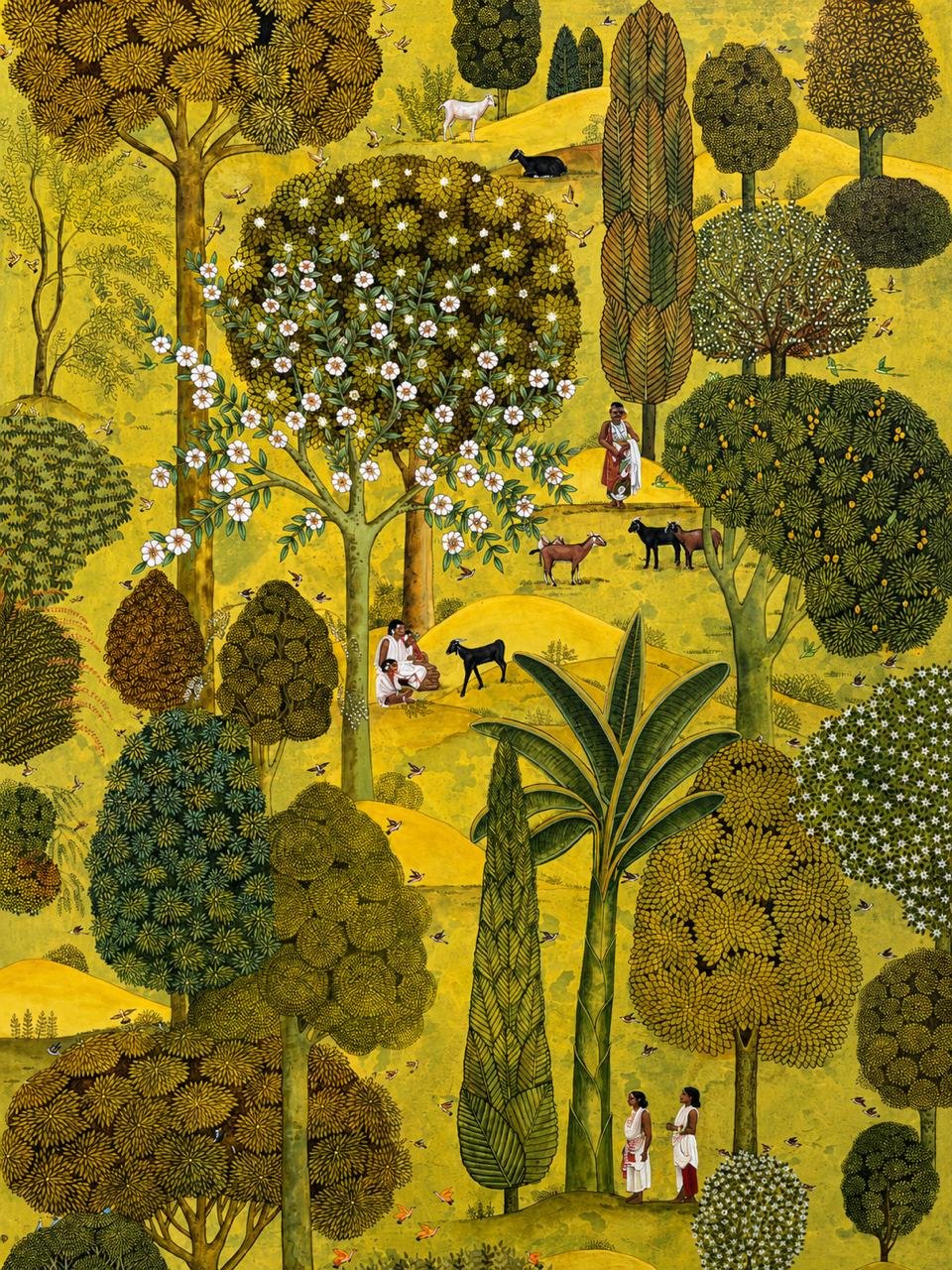
Painting Beyond the Surface
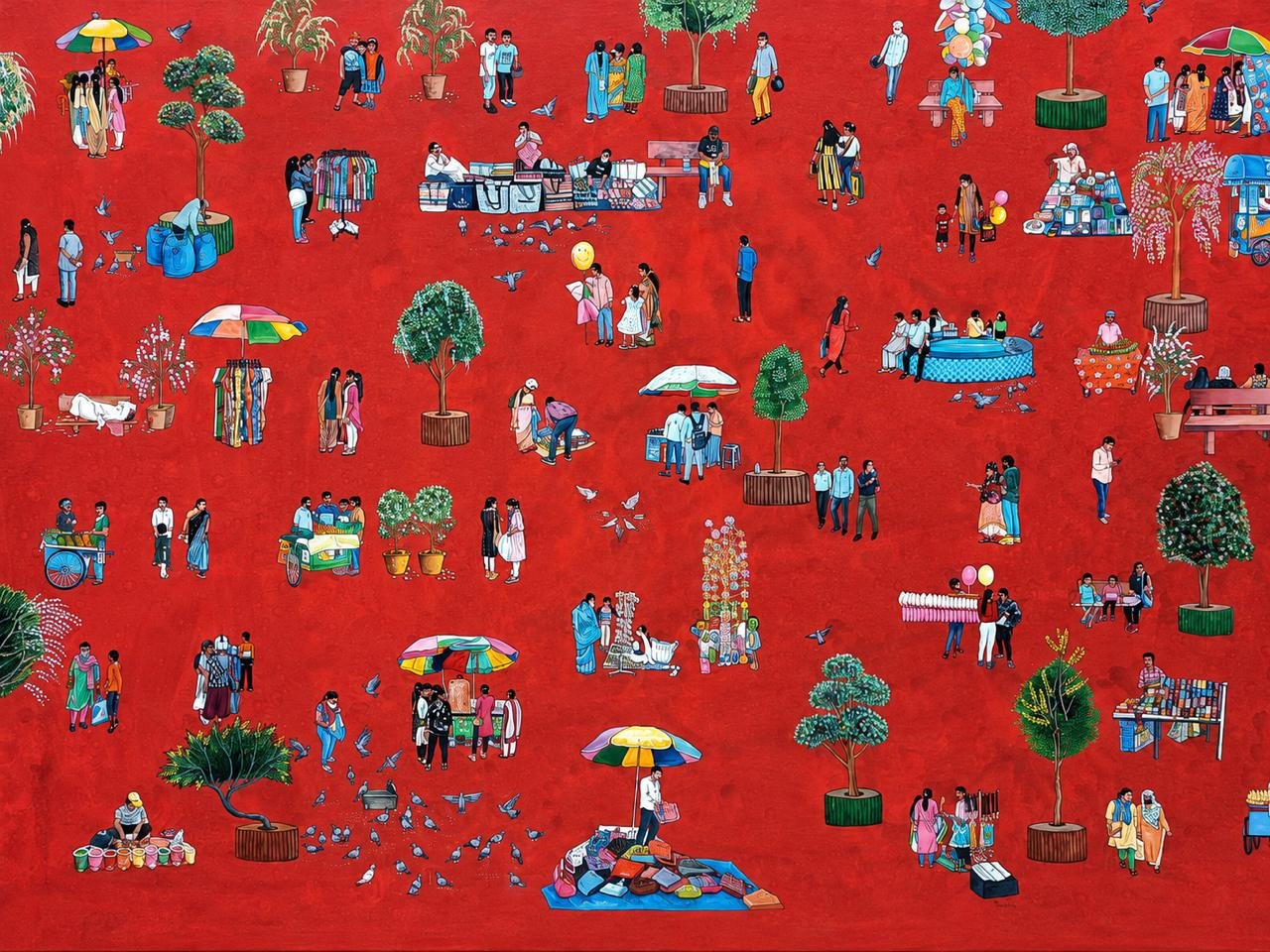
Painting is traditionally associated with a two-dimensional surface. Yet contemporary painting can also explore texture, layering, material presence and physical depth.
Majhi’s artistic language combines narrative imagery with geometry, repetition, environmental references and cultural memory. The physical character of the surface can contribute to how these elements are experienced.
Colour is not merely visual.
Texture is not merely decorative.
The surface itself can influence the emotional and physical quality of an artwork.
This becomes especially relevant when an artist draws inspiration from environments where material culture is closely connected with everyday life.
From Natural Environment to Artistic Material
Majhi’s engagement with Niyamgiri and the Dongaria Kondh community has introduced her to relationships between natural resources, cultural practices and visual traditions.
Materials such as chalk stone, charcoal, turmeric, geru soil and other earth-derived substances have informed aspects of her artistic exploration.
The importance of these materials goes beyond their colour.
They can carry associations with land, locality and traditional knowledge.
When transformed into artistic material, they retain a connection to the environment from which the artistic idea emerged.
This creates a dialogue between nature and representation.
Material and Cultural Knowledge
Traditional knowledge often includes sophisticated understandings of materials.
People learn through experience how natural substances can be used, prepared, combined or transformed. Such knowledge may be connected with art, architecture, agriculture, ritual and everyday life.
For Majhi, engagement with communities provides opportunities to encounter these relationships directly.
The artist does not simply borrow a visual style. The encounter can encourage deeper reflection on how knowledge about materials is transmitted and practiced.
This is one reason material can become culturally meaningful within contemporary art.
Sculpture and the Physical Presence of Art
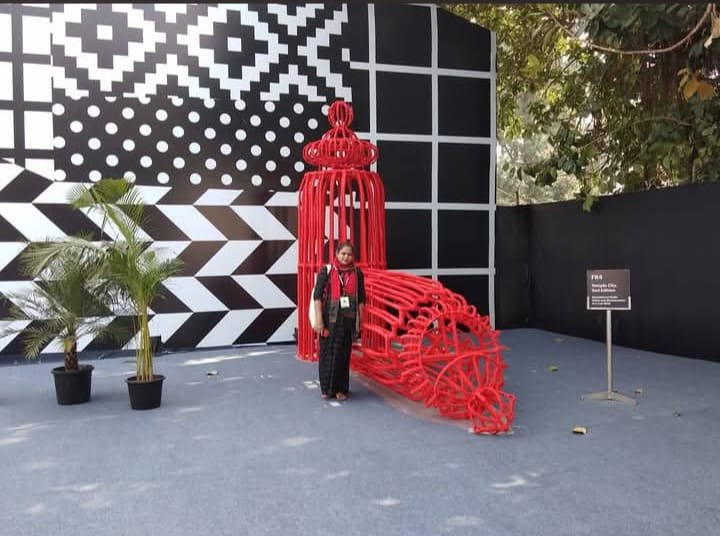
Sculpture changes the relationship between an artwork and its audience.
A painting occupies a surface.
A sculpture occupies space.
The viewer can potentially move around it, observe different angles and experience its physical presence from changing positions.
Majhi’s sculptural practice forms part of this wider exploration of space and material.
The physical object can create a relationship between the artwork, the surrounding environment and the person experiencing it.
Material therefore influences not only appearance but also movement and perception.
Installation and the Experience of Space
Installation art extends this idea even further.
Instead of presenting one isolated object, an installation can bring together multiple elements within a particular environment.
Materials, objects, spatial relationships and the viewer’s movement can become interconnected.
For an artist whose practice frequently considers people, places and environments, installation offers a natural way to explore these relationships.
The viewer does not simply look at an installation from one fixed position.
The viewer experiences it through space.
Public Art and the Material of the City
Public art introduces another material dimension: the existing environment.
A wall has a particular texture.
A street has a particular scale.
A building has a particular architectural character.
A public space has its own patterns of movement.
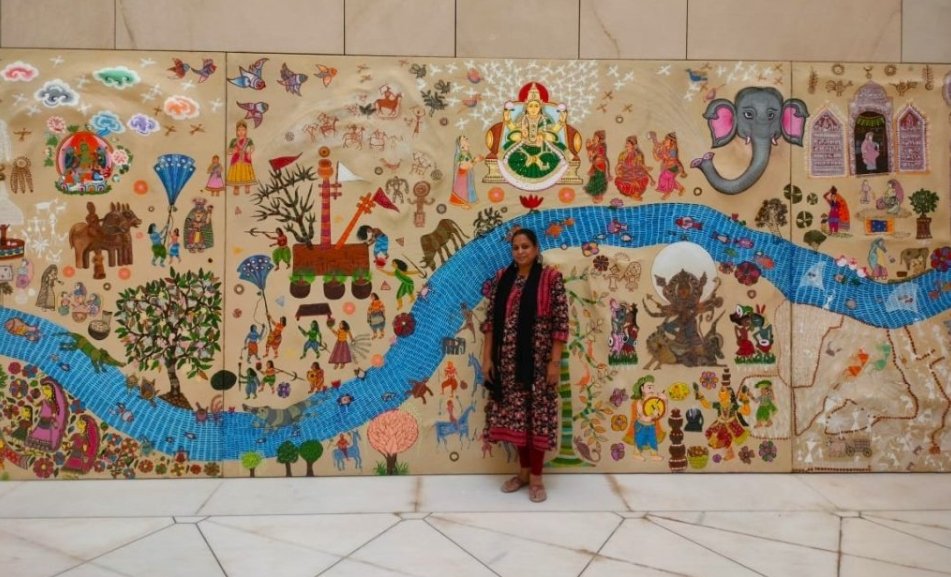
When an artist creates a large-scale intervention in such a setting, the surrounding physical environment becomes part of the artistic equation.
Majhi’s public-art practice demonstrates how contemporary art can respond to these conditions.
The wall is no longer simply a blank surface.
It becomes a meeting point between artistic expression and public life.
Material Choices and Accessibility
Material can also influence how audiences encounter art.
A monumental public artwork can be experienced without entering a gallery.
A tactile sculptural form can communicate through physical presence.
A mural can become part of a neighbourhood’s everyday visual environment.
A workshop using accessible materials can encourage children to experiment without feeling that artistic creation belongs only to professionals.
Majhi’s work across public art and education demonstrates the importance of making creative experience possible in different settings.
The Artist as Experimenter
Working with multiple materials requires experimentation.
The artist must understand how a material behaves, how it responds to a surface, how it changes under different conditions and how it interacts with other materials.
This process can involve trial, adjustment and discovery.
Such experimentation is particularly important in contemporary art, where artists are not necessarily restricted by traditional definitions of medium.
Majhi’s multidisciplinary practice reflects this openness.
Painting can meet mixed media.
Sculpture can meet installation.
Traditional materials can enter contemporary visual language.
Public space can become an artistic medium in itself.
Material, Memory and Place
One of the most interesting aspects of material-based practice is its relationship with memory.
A material associated with a particular landscape can recall that landscape.
A traditional substance can evoke cultural knowledge.
A familiar texture can trigger memories of a place.
An earth-derived colour can suggest soil, agriculture or geography.
In this way, materials can communicate indirectly.
The viewer may not consciously identify every reference, but the physical and visual qualities of the work can contribute to an atmosphere of place and memory.
Material Does Not Exist in Isolation
Majhi’s approach also suggests that material should not be separated from the people who use it.
A material can have a history.
It can belong to a landscape.
It can be connected with a community.
It can carry knowledge about preparation and use.
It can acquire new meaning when introduced into contemporary artistic practice.
This makes material an important bridge between physical substance and cultural experience.
From Substance to Meaning
The transformation of material into art is ultimately a transformation of meaning.
Soil becomes colour.
A wall becomes a visual field.
An object becomes sculpture.
A collection of materials becomes an installation.
A public surface becomes a site for cultural expression.
The material remains physically present, but its meaning expands through artistic context.
This transformation lies at the heart of creative practice.
A Materially Conscious Contemporary Practice
Satyabhama Majhi’s artistic journey demonstrates that contemporary practice can remain open to both experimentation and cultural knowledge.
Her use of different media allows her to respond to varied environments and artistic situations. Her engagement with traditional materials connects contemporary expression with older forms of knowledge, while her public and community-based work places those ideas within shared environments.
The result is a practice in which material is more than an instrument.
It can become a carrier of memory, a reference to place, a source of experimentation and a connection between artistic creation and lived experience.
Conclusion
The story of Satyabhama Majhi’s art is therefore not only a story of images and ideas. It is also a story of surfaces, substances, spaces and transformations.
Her artistic process demonstrates how the choice of material can influence what an artwork communicates and how it is experienced.
Whether working on a painting, developing a sculptural form, creating an installation, experimenting with mixed media or contributing to a public-art project, Majhi approaches art through an expanded understanding of material possibility.
In her work, materials can connect the physical world with cultural memory.
They can connect the artist with place.
And they can remind audiences that art is not simply something imagined in the mind—it is something given physical form through an ongoing conversation between idea, material, environment and human experience.