

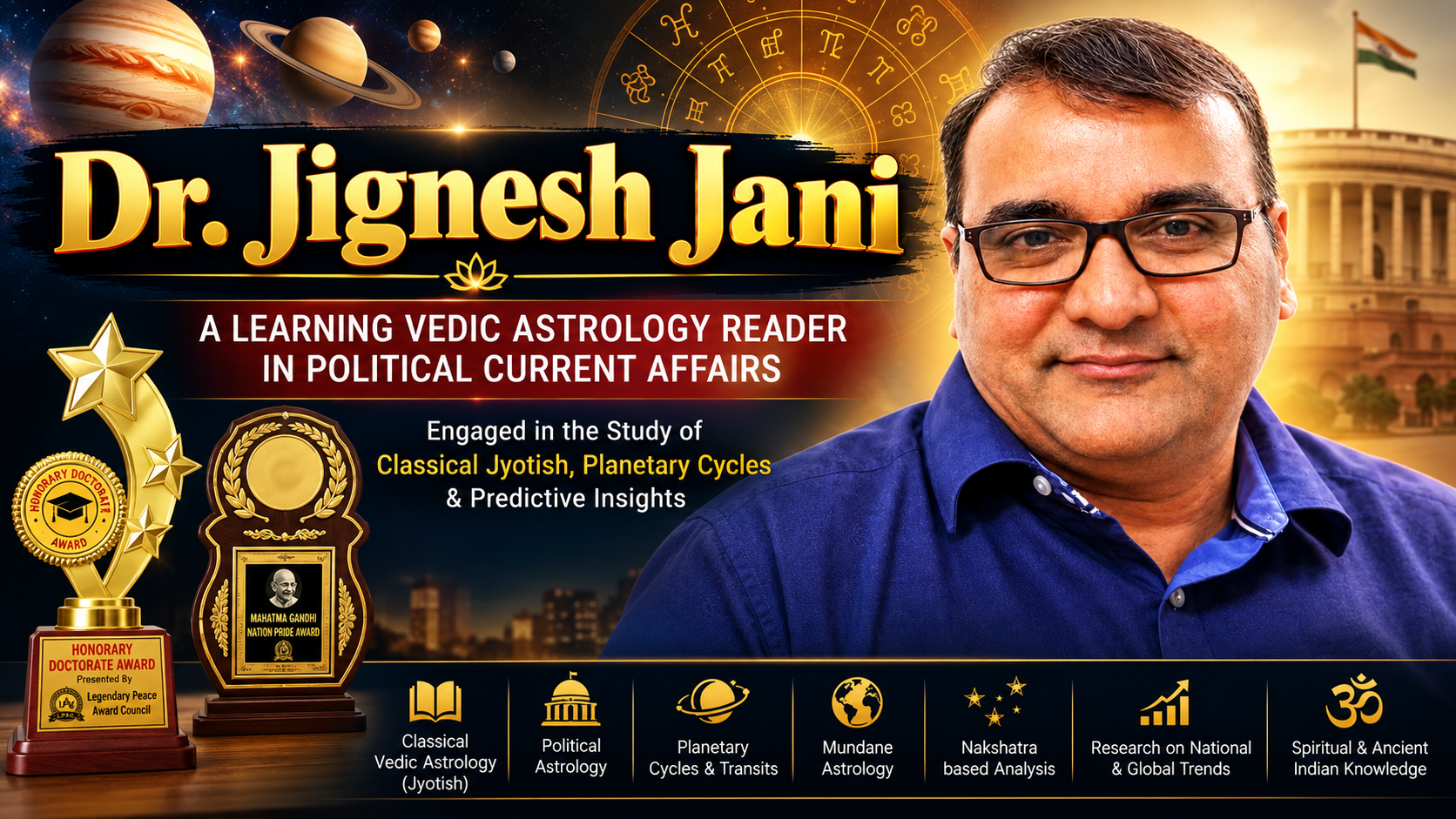
By Dr. Jignesh Jani
At a time when the world is facing multiple geopolitical challenges, humanity must ask an important question: are more weapons creating more security, or are they pushing the world toward greater instability?
Across different regions, conflicts continue to threaten peace and development. The Russia–Ukraine war has become one of the most significant geopolitical crises of recent years, while tensions involving the United States, Iran, and Israel have raised concerns about wider regional consequences. These situations demonstrate how quickly political disagreements can transform into humanitarian crises.
The lessons of history are clear. Wars may achieve short-term objectives, but they rarely provide permanent solutions. Conflicts often leave behind broken societies, economic difficulties, emotional trauma, and unresolved grievances that continue for generations.
Every war has a human face. Behind political decisions are ordinary families who experience the consequences. Children lose their schools, communities lose homes, healthcare facilities are damaged, and millions of people are forced to rebuild their lives. The cost of war is not measured only by military losses but by the suffering of innocent civilians.
The environmental impact of conflict is another serious concern. Armed conflicts damage forests, pollute rivers, destroy infrastructure, and create environmental problems that can continue long after fighting stops. Humanity cannot ignore these consequences while already facing major challenges such as climate change and resource shortages.
The global community must rethink the approach toward international disputes. Powerful nations should use their influence to promote negotiations, ceasefires, and diplomatic solutions instead of allowing conflicts to continue indefinitely. Military assistance may change the balance of power, but peace requires political courage and meaningful communication.
The money spent on weapons and warfare represents resources that could transform millions of lives through better education, healthcare systems, scientific research, and economic development. A safer world is not created only through stronger armies; it is created through stronger cooperation.
India’s principle of “Vasudhaiva Kutumbakam” provides a timeless message that humanity is interconnected. The suffering of one nation eventually affects the entire world through economic, social, and humanitarian consequences.
The greatest achievement of leadership is not winning wars but preventing them. The world needs leaders who choose dialogue over destruction and cooperation over confrontation.
The message for humanity is simple: peace is not a sign of weakness. Peace is the greatest expression of wisdom, responsibility, and strength. The future belongs not to those who build more weapons, but to those who build understanding among nations.